The global vaping industry continues to expand, but so do the regulatory expectations placed on manufacturers, importers, and retailers. As more governments begin treating e-liquid and vaping devices like traditional tobacco products, compliance has become one of the most important factors for long-term business survival. Whether a company produces nicotine e-liquids, non-nicotine shortfills, or disposable vapes, understanding global requirements is essential.
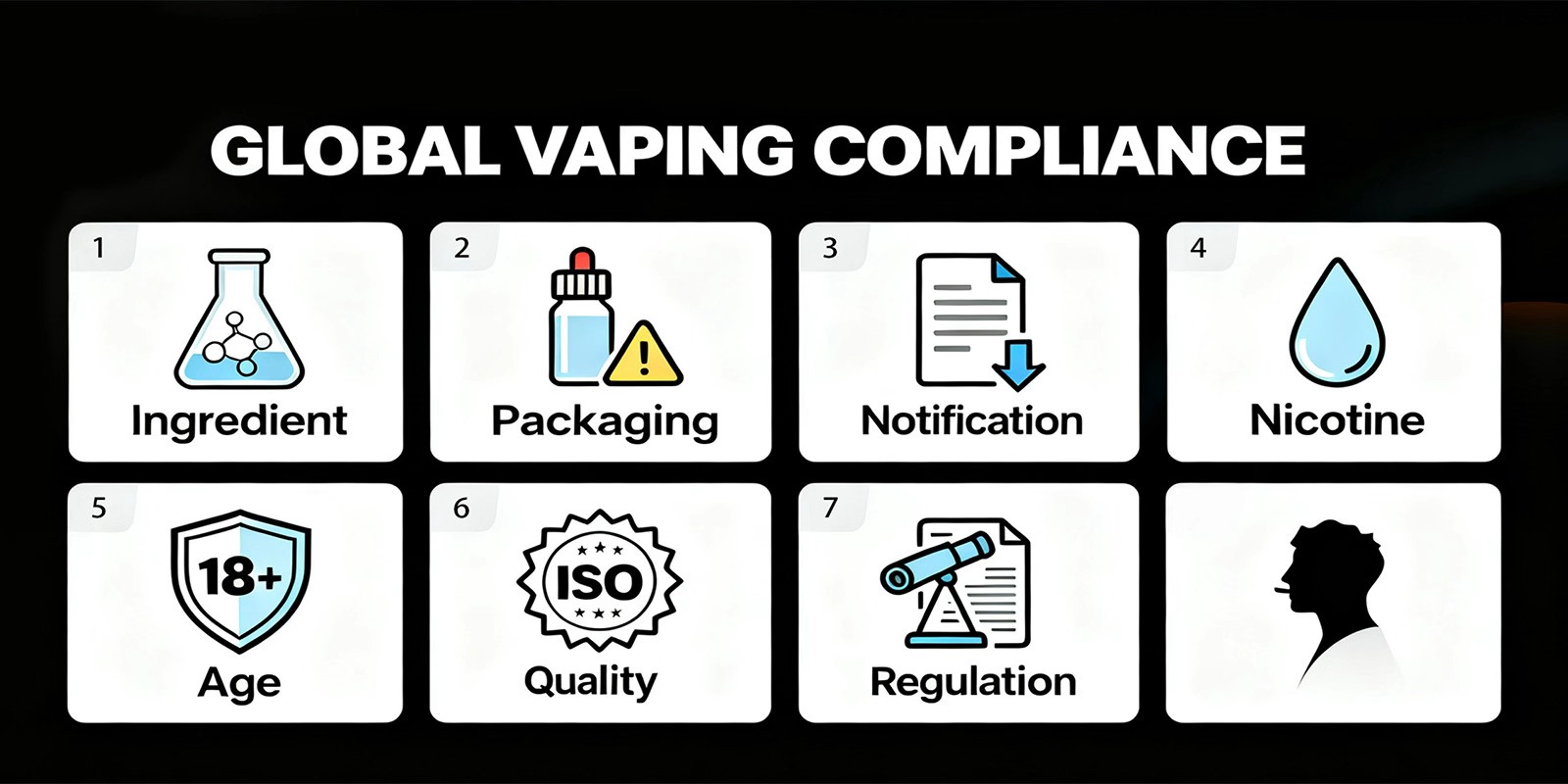
- Product Safety and Ingredient Transparency One of the core focuses of 2025 regulations is product safety. Authorities are increasingly demanding full transparency regarding ingredients and emissions. Many regions now require manufacturers to avoid additives such as vitamins, caffeine, coloring agents, and stimulants that could mislead consumers about health benefits or risks.
E-liquid formulations must typically undergo toxicological assessment to ensure each ingredient is suitable for inhalation. Safety data sheets (SDS) and ingredient dossiers are becoming standard documentation for compliance submissions. Brands that fail to maintain consistent ingredient lists across different markets often face delays or product recalls.
- Packaging and Labeling Discipline Packaging requirements have tightened significantly. Many markets require child-resistant bottles, leak-proof nozzles, and tamper-evident seals. Labeling rules normally include nicotine strength, ingredient list, product batch information, hazard warnings, and usage instructions.
Health warnings are now standardized in many countries. For example, the EU mandates a 30% health warning, while the UK requires both UKCA and TPD-compliant labeling. Even markets without strict regulations, such as parts of Asia or the Middle East, are gradually introducing standardized warning formats to align with global safety norms.
- Reporting and Notification Obligations In regions such as Europe, the United Kingdom, and the Gulf states, brands must file product notifications before products can be sold. This typically includes toxicology reports, emissions testing, packaging mockups, and manufacturing declarations. Some countries also require the submission of annual sales and market data to monitor consumption trends.
The process varies widely by country, but the purpose is consistent: regulators want to ensure consumer safety while preventing misleading marketing. For manufacturers, establishing a stable compliance workflow—covering documentation, testing, and quality control—can reduce delays and help streamline market entry.
- Nicotine Restrictions and Bottle Size Limits Nicotine limitations exist in many regions. The EU, UK, and several Asian markets limit nicotine strength to 20 mg/ml. Bottle size restrictions are also common, such as the 10 ml maximum for nicotine-containing e-liquid under TPD.
Non-nicotine e-liquids, including longfills and shortfills, are often exempt from these restrictions but may still fall under general chemical regulation. In markets such as the UAE, Bahrain, and Saudi Arabia, even zero-nicotine liquids require conformity assessments.
- Age Verification and Responsible Marketing Protecting minors remains the strongest focus of global regulators. Marketing restrictions now include limitations on flavor descriptions, packaging imagery, and social media advertising. Retailers must implement strict age-verification systems, both online and offline.
Compliance in marketing is no longer only about following the law—it is about maintaining long-term brand credibility and preventing unnecessary regulatory pressure.
- Manufacturing Standards and Quality Assurance Good Manufacturing Practices (GMP) are becoming the new minimum entry standard. Regulators expect cleanroom production, documented processes, batch traceability, and proper storage conditions. Many brands voluntarily obtain third-party quality certifications to demonstrate compliance and build trust with distributors and consumers.
- Preparing for Future Regulation Looking ahead, many countries are planning to tighten controls on disposable vapes, nicotine caps, and flavor availability. Brands that prioritize compliance today will be better positioned for future changes.
Overall, global vaping compliance in 2025 centers on safety, transparency, and responsible marketing. Companies willing to invest in high-quality production and proper documentation will continue to thrive as the regulatory landscape evolves.